
Key Takeaways
- Protein isn’t just for gym-goers; it supports essential daily functions like immunity, digestion, healing, hormones, and energy.
- You need to eat 0.8 to 1g of protein per kg to complete your daily protein requirement.
- Eating enough protein helps control cravings, maintain weight, improve skin and hair, and support overall well-being.
- Both plant and animal proteins can meet daily needs when consumed consistently and in the right combinations.
- Most people don’t get enough protein, making it important to include a protein source in every meal to stay healthy and energized.
In This Article
What Is Protein And Why Do We Need It?
Why Is Protein Important for Everyone?
Understanding Different Types Of Protein
Daily Protein Requirements: How Much Protein Does the Average Person Need?
Frequently Asked Questions ( FAQs )
Introduction
Many people think protein is only for gym-goers, bodybuilders, or athletes, which is why the average person often ignores it in their daily diet. If you are one of those people who do not know the importance of protein, read this blog till the end because it will open your eyes! Many people are unaware of why protein is essential for overall health, not just muscle building, which frequently results in unintentional nutritional deficiencies in their daily meals.
Understanding what protein is the role of protein in our body, and the many protein benefits shows how essential it actually is for everyone. So, without further ado, let’s dive right into the importance of protein.
What Is Protein And Why Do We Need It?
Scientifically, protein is a macronutrient made of amino acids. But in simpler terms, protein is the building block for your body. What is the function of proteins? Your body uses protein to build and repair tissues, produce enzymes and hormones, support immunity, and keep muscles and organs functioning properly. These are the most important uses of protein; however, there are plenty of other protein benefits.This is also the reason why, a lot of families now opt for simple blends, such as plant protein for rotis to support their daily protein intake and Family Nutrition Mix to help cover essential nutrients.
Why Is Protein Important for Everyone?
Whenever we talk about the importance of protein in our daily lives, a question arises: what protein does to your body? Why do we need protein? So, let’s deal with all the questions around the benefits of eating protein and tell you what is the role of protein in your body.
1. Sustained Energy and Reduced Cravings
Protein supports everyday life, not just exercise and muscle building. Protein is digested slowly (as compared to carbs), which keeps you full for longer. This means fewer sudden hunger pangs, fewer sugar cravings, and more consistent energy throughout the day. Even simple meal additions like Fiber Fix can help improve digestion and promote fullness.
2. Supports Muscle, Bone, and Body Repair
You might already know this protein function. Even if you don’t lift weights, everyday activities like walking, climbing stairs, carrying groceries, or sitting at your desk, create tiny wear and tear in the body. Protein helps repair these tissues, supports bone strength, and reduces the risk of muscle loss as you age.
3. Protein’s Impact on Satiety and Weight Management
Protein helps in maintaining your weight (and even losing weight). Protein naturally increases your metabolism because your body works harder to digest it compared to fats and carbs. Eating protein supports long-term weight management.
4. Enhances Skin, Hair, and Overall Appearance
Your hair is made of keratin, skin is made of collagen, and muscles are made of myosin - all of which are types of protein. So, for a healthier appearance inside and out, you need proper protein in your daily diet.
5. Improves Mood and Mental Well-Being
Another major role of protein is to ensure your mental well-being. Amino acids from protein help produce brain chemicals like serotonin and dopamine. They influence mood, focus, and emotional balance. That’s why protein-rich meals can help reduce irritability, improve concentration, and support mental clarity.
6. Supports Heart Health and Healthy Aging
Yes, protein is good for your heart as well, especially for seniors. A protein-rich diet also helps keep the immune system strong as you age. To improve everyday wellness, a lot of people combine their protein intake with products like Immunity Mix.
Understanding Different Types Of Protein
Protein can be basically divided into two types: Plant Protein: Protein that is sourced from plants, like lentils, beans, tofu, quinoa, nuts, and seeds, falls under plant protein. It is rich in fiber and antioxidants. Animal Protein: The protein you get from meat, eggs, dairy, and seafood comes under animal protein. It is a complete protein with all nine essential amino acids. Protein supplements like whey, casein, and plant-based powders like plant protein forrotis are convenient for people who struggle to meet their daily needs through food.

Daily Protein Requirements: How Much Protein Does the Average Person Need?
Protein requirements by weight for adults are around 0.8–1 gram of protein per kg of body weight. If you weigh 60 kg, your daily protein requirement will be around 48 to 60 grams.
Common Myths About Protein
There are several misconceptions and myths about protein consumption for common people. Nutritionists and experts have debunked some of the common myths about protein.
-
I Don’t Work Out, So I Don’t Need Extra Protein
People who work out need more protein for muscle recovery, but that does not mean you don’t need protein at all!
Your body needs protein for digestion, immunity, hormones, skin, hair, and healing, not just muscle building. Even without exercise, protein is essential for daily repair and maintenance. This is why protein is important for everyone not just gym goers.
-
High-Protein Diets Are Bad For Your Kidneys
This is one of the most common misconceptions. Protein does not damage the kidneys in healthy people. Only people with already existing kidney diseases may be advised to reduce protein intake because their filtration capacity is already weak.
-
Plant Proteins Aren’t As Good As Animal Proteins
We are tired of hearing this! Plant protein is as good as animal protein, if not better. Individual plant protein sources may be incomplete, as opposed to animal protein sources, which are complete. But you can mix various plant protein sources like legumes, edamame, and tofu with grains for complete protein. They also provide fibre and antioxidants that animal proteins don’t.
Signs Of Protein Deficiency
Here are some signs of low protein intake in daily life to look out for

- Constant hunger or cravings
- Fatigue and low energy
- Hair thinning or breakage
- Weak or brittle nails
- Dry skin
- Frequent infections
- Slow wound healing
- Loss of muscle tone or strength
Frequently Asked Questions ( FAQs )
Why is protein important if I don’t go to the gym?
Because there are several benefits of protein for regular people not into fitness. Protein isn’t just for muscle gain. Your body uses protein every day to repair tissues, support immunity, produce hormones, maintain skin and hair health, balance blood sugar, and keep your energy stable. This is why you need protein even if you don’t go to the gym.
How much protein do I really need each day?
You need 0.8 to 1 gram of protein per kg of your body weight every day.
What are the everyday health benefits of protein?
There are protein benefits beyond muscle growth. The everyday benefits of protein for energy and immunity include keeping you full, balancing blood sugar, reducing cravings, and supporting healthy skin, hair, and nails.
What’s the best time to consume protein?
Spread protein across all meals rather than eating it all at once. Aim for some protein at breakfast, lunch, dinner, and snacks to keep energy stable and support steady absorption.
Is plant protein enough for daily protein requirements?
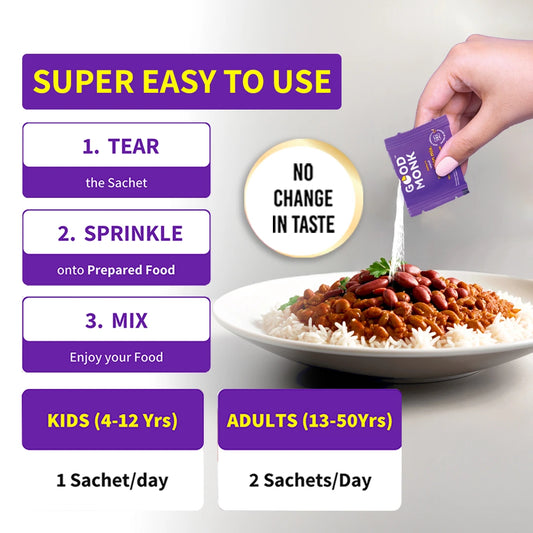
Yes, plant proteins like dal, chole, rajma, tofu, nuts, seeds, and whole grains can meet your needs. You can also add vegan protein supplements like Good Monk’s plant protein for roti in your diet.
Can protein really help with weight control and energy?
Yes, protein keeps you fuller for longer, reduces cravings, and helps maintain lean muscle, which boosts metabolism.
How can you easily add more protein to your daily meals?
Add Good Monk’s plant protein for roti to make your meals richer in protein without any extra effort. Also, add snacks like roasted chana, yoghurt, and nuts to increase your protein intake.
Related Articles:
- What Is Protein & Why It’s Important for Your Body
- Everything You Need To Know About High Quality Protein And PDCAAS
- How Much Protein Do You Need Daily? Benefits for Muscle & Metabolism
- Nutritious Lunch Box Ideas for Kids | Easy & Healthy Meals
- Smarter Plant Protein Guide for Indian Vegetarian Meals
- Micronutrient Deficiency – Why is it called the hidden hunger?
About the Author
Written by the team at Good Monk—a clean and honest nutrition brand supported by doctors and food scientists. Every product is backed by thorough clinical evidence and clinically proven ingredients and made to help families eat better, feel better, and live healthier every day.
Popular Searches
Multivitamin For Adults | Nutrition Mix Powder | Fiber Supplement | Milk Mix Powder | Powdered Fruit Drink Mix | Orange Fruit Drink | Immunity Boosting Powder | Weight Management Program | Weight Management Powder | Healthy Powder Drinks