
If you are a health-conscious person, you have definitely heard that oats are one of the healthiest whole-grain breakfast options to kick-start your mornings. If you've ever googled 'oats has protein' or wondered how much, you're at the right place.
Well, for starters, oats have protein and fibres in them, which can keep you full and energised for hours. In addition, they are also a great source of multiple vitamins and minerals. So, whether you enjoy them as oatmeal, overnight soaked oats, smoothies, or healthy snacks, oats provide a rich combination of important nutrients.
Understanding the protein and nutritional value of oats per 100g can further help you make better daily dietary choices. In this blog, we will look at how much protein is there in oats and what benefits it provides to your overall health.
In This Article
How Much Protein is There in Oats? A Complete Breakdown
Oats Nutritional Value and Protein Content Explained
Different Types of Oats and Their Protein Content
How Much Protein in Oatmeal Compared to Other Breakfast Foods?
Is Oats Rich in Protein for Weight Loss and Muscle Gain?
Oats Nutrition Protein Benefits for Overall Health
Key Takeaways
- If you've been wondering how much protein is in oats, it's about 16.9 grams per 100 grams. Thus, it is a great source of protein for people who want to start increasing their daily protein intake.
- People trying to lose weight or gain muscle mass should include oatmeal in their diet along with other sources of protein, such as milk, yoghurt, nuts, and seeds. Moreover, a roti protein mix is a convenient, healthy supplement you can add to your daily diet to further increase your protein intake.
- Oats have much more than protein; they also provide fibre, vitamins, and minerals that offer many benefits to the body.
How Much Protein is There in Oats: Complete Breakdown
Oats are a powerhouse of nutrition, packed full of fibre that helps reduce the risk of arthritis and heart disease. The value of oats protein per 100g comes to nearly 13- 17 g of protein and about 66 g of carbohydrates.
Here is a complete oats nutritional value and protein content breakdown:
|
Nutrient |
Per 100g |
|
Calories |
389 kcal |
|
Protein |
16.9g |
|
Carbohydrates |
66.3g |
|
Fibre |
10.6g |
|
Fat |
6.9g |
|
Iron |
4.7mg |
|
Magnesium |
177mg |
|
Vitamin B1 (Thiamine) |
0.8mg |
Source: Metropolis India
Oats Nutritional Value and Protein Content Explained
Oats are widely accepted for their multiple health benefits. From weight management and supporting healthy cholesterol to supporting your gut health and reducing the risk of type 2 diabetes, oats are packed with fibre, vitamins, and minerals. A key feature of oats is their protein content, which contributes to muscle repair and growth.
Since protein plays an important role in muscle repair, metabolism, and maintaining overall health, let us look at the content of protein in 100g oats:
|
Nutrient |
Amount |
|
100 gm oats protein |
~16.9 g |
|
50 gm oats protein |
~8.4 g |
|
30 gram oats protein |
~5 g |
|
~3.38g |
Different Types of Oats and Their Protein Content
For a quick reference, 1 bowl of oats protein content typically ranges from 5-7g, depending on the serving size and type of oats. Here is a comparison of protein in different types of oats:
|
Type of Oats |
Serving Size |
Protein Content |
|
Protein in cooked oats |
1 cup cooked (=240g) |
5 - 6g |
|
Protein in overnight oats |
1 serving (=1 cup with add-ins) |
6 - 8g |
|
Protein in steel cut oats |
¼ cup dry (=1 cup cooked) |
5 - 7g |
|
Protein in rolled oats |
½ cup dry |
~5g |
How Much Protein is in Oatmeal Compared to Other Breakfast Foods?
Are oats high in protein? Not necessarily. This is because, when compared to the other healthy breakfast foods, oats sit in the middle range of protein content. If you are wondering how much protein is in oatmeal, the answer is 5-6g (usually 5.55g), which is less than foods rich in protein, such as eggs and Greek yoghurt.
|
Breakfast |
Normal Serving Size |
Protein Content |
|
Oatmeal (cooked) |
1 cup cooked |
5-6g |
|
Eggs |
2 large eggs |
12-13g |
|
Greek Yogurt |
1 cup (plain) |
15-20g |
|
Milk |
1 cup |
8g |
|
Oats with milk and Indian dry fruits (almonds, raisins, dates) |
1 / 2 cup of 40g dry oats with 250ml milk, along with 1 tbsp dry fruits |
15-20g |
|
Smoothie (with milk / Berries Juice Powder Mix for more flavour) |
1 glass |
8-12g |
|
Poha (per bowl) |
100g cooked |
4-5g |
Now, even though oatmeal sits in the moderate protein range, you can easily increase the protein in oats by simply adding protein-rich foods such as milk, yoghurt, nuts, protein powder, and seeds.
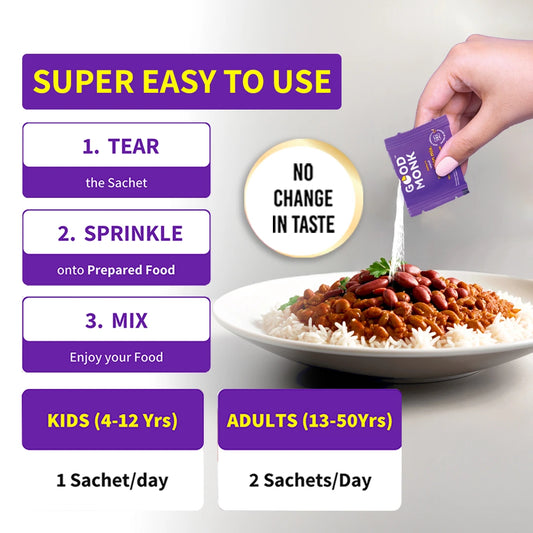
Pro Tip: For busy mornings, mix 1 serving of Good Monk's Nutrition Mix - multivitamin with probiotic into your oatmeal, it adds complete nutrition without altering the taste.

Are Oats Rich in Protein for Weight Loss and Muscle Gain?
While oats cannot be considered a high-protein source, they contain a fair amount of protein. The
oats protein content for weight loss and muscle gain is 16.9 g per 100 g. Hence, they do support weight management and muscle gain.
With regard to weight loss, they keep you feeling fuller for longer periods due to their high fibre content and hence prevent unnecessary snacking. When it comes to muscle gain, they act as a good source of consistent energy in workouts when consumed alongside protein-rich foods such as milk, curd, nuts, and protein powder.
Oats Nutrition: Key Benefits for Overall Health
If you are wondering what is good for breakfast, oats are more than just a convenient breakfast option. A high protein oat breakfast offers multiple ideas and benefits that can improve your overall well-being.
1. Increases Energy Levels
Carbohydrates in oats provide a slow, steady release of energy, helping you remain productive and focused throughout the day. Unlike energy drinks that leave you sluggish after the sugar rush is over, oatmeal will supply you with constant energy throughout the day. To your daily oats breakfast you can also add nutrition supplements from Good Monk that have essential nutrients.
2. Improves Heart Functioning
Soluble fibres of oats may help support healthy cholesterol levels, especially low-density lipoprotein (LDL). Eating foods rich in soluble fibre is recommended as part of a heart-healthy diet.
3. Ensures Healthy Digestion
Fibre is an essential nutrient which is responsible for a person's proper digestive functioning, and oats are abundant with both soluble and insoluble fibres. It helps regulate bowel movements, preventing problems such as constipation and other digestive issues.
4. Assists in Losing Weight
For people looking to lose weight, oats may be a good option. Oats contain a lot of fibre, which will allow you to feel full for a long time and reduce the urge to snack.
5. Supports Blood Sugar Management
Maintaining stable blood sugar levels is important for overall health, especially for those who are managing or at risk for diabetes. Fibre, particularly the beta-glucan present in oats, can help in this case, as it helps regulate blood sugar levels in consumers. If you are looking to increase your daily fiber intake, fiber powder from Good Monk helps manage glycemic levels and makes you feel fuller for longer durations.

Explore Good Monk's nutrition range and make every bowl of oats healthier, tastier, and more nourishing.
FAQs
1. Can oats alone meet daily protein requirements for an average adult?
No, oats alone do not fulfil the daily protein requirements, but they must be supplemented with other protein sources, such as milk, yoghurt, nuts, and seeds.
2. What factors affect the protein quality of oats during processing and cooking?
Different preparations and processing techniques can have a minor impact on protein quantity and nutritional value. Medium heat exposure actually helps in improving the protein digestibility. However, excessive heat can reduce the quantity of certain amino acids.
3. Is oat protein considered a complete protein, and what amino acids does it lack?
No, oats are not considered a source of complete protein because they lack certain essential amino acids. Lysine is the limiting amino acid in oats.
4. Who should avoid relying only on oats for protein intake in their diet?
Individuals seeking high protein intake, such as athletes and those who need to gain muscle mass, should not depend on oats alone for their daily protein intake.
Popular Blogs